

922 results found
Featured results

More results

COVID-19 is the worst crisis since the Great Depression, and it will take significant innovation on the policy front to recover from this calamity.
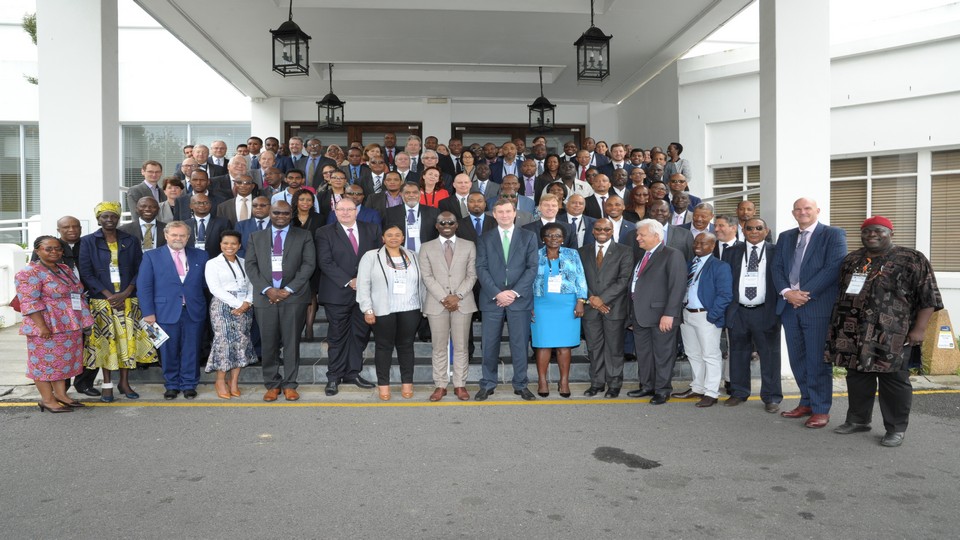
A major factor hindering infrastructure implementation and delivery is the absence of good governance, according to the 130 delegates from 27 countries who came together for the first Regional Roundtable on Infrastructure Governance in Cape Town in November.
 World Bank Blog
 Global Infrastructure Outlook

This report addresses the critical question: how can the public and private sectors build successful partnerships?
 View the framework

The Toolkit is intended to provide African countries, in summary form, with an overview of the experience to date with railway concessioning in Sub-Saharan Africa.
This report outlines the guidance and recommendations concerning the reform proposals of state owned enterprises operating in the field of water supply and urban sanitation as well as providing guidance/recommendations concerning economic management options for service providers in Vietnam.
The Framework provides systematic structure for proactively disclosing information pertaining to PPP Projects.
This PPP checklist is an extension of the initial framework.

Join us for a webinar that will highlight solutions for governments and project proponents to mobilise private financing and inclusive infrastructure investment in order to reach vulnerable groups and underserved regions.

In this panel discussion, participants will be introduced to approaches to attracting institutional investors and mobilising capital markets, hearing solutions and lessons learnt from recent projects in India and South Africa.

60% of infrastructure assets reporting to GRESB in 2023 currently have a greenhouse gas (GHG) emissions reduction target aligned to net zero. However, these net zero targets may not be ambitious enough. Only a third of assets have a target that is science-based or aligned to a net zero-targeting framework. Further, targets tend to capture only Scope 1 and 2 emissions (omitting Scope 3 emissions) and be location, rather than market-based. However, regional variances exist, with Europe leading the way in Scope 3 and market-based net zero targeting.

What role can the private sector play in a green transition? How is green financing implemented, and what are the current green financing trends? These are a few of the key questions that will be explored in this GI Hub and IFC webinar.

How can collaboration models and public intervention close the infrastructure gap to increase the value that 5G brings?

53 members of our InfraTech Leaders Ecosystem – from more than 25 public and private entities – met for the first time to discuss ‘quick wins' and strategic priorities based on the World Bank's InfraTech Policy Toolkit, developed earlier this year to support the Riyadh G20 InfraTech Agenda.

Find out how water scarcity is shifting infrastructure development.

These five social infrastructure trends are not new concepts, but the rate at which they are appearing all over the world is staggering.

Developing infrastructure that is sustainable, resilient and inclusive is a complex endeavour and it is even more so in emerging markets.

As a budding entrepreneur, honing your pitch is critical to securing funding and support. Here are some of the do’s and don’ts when it comes to developing and presenting a strong pitch.

3D printers can produce components on-site to enable a faster response to maintenance needs, reducing environmental impact from transportation and reducing service downtime.

This session examined how innovative forms of commercial financing are being mobilised to finance sustainable infrastructure

How can we drive infrastructure delivery reforms? Join GI Hub and Jacobs on 26 October for the launch webinar of our newest initiative, Improving Delivery Models.

