

922 results found
Featured results

More results

The COVID-19 pandemic boosted investors’ interest in digital infrastructure and digital services. Policymakers have an opportunity to amplify these effects by accelerating market reforms
 Infrastructure Monitor
 Disruptive Technologies and Venture Capital
This is a study in 22 low- and middle-income countries in Asia revealing a strong positive relationship between social protection spending and health outcomes.
 Download

This note discusses competition and consumer choice in the healthcare sector.

Open data is another aspect of digitalisation that is gaining traction. This blog explores the importance of open data to infrastructure delivery and offers some practical steps for decisionmakers in the public and private sector to implement and utilise open data.

The UNECE International PPP Centre of Excellence has as its core vision the implementation of PPP solutions to promote the United Nations Sustainable Development Goals (SDGs).
This document provides suggestions on how to address typical challenges faced in the implementation of Facilities Management (FM) through PPPs with a focus on emerging countries with limited experience of the PPP model.

Merchant infrastructure, larger investors and the transport sector have experienced larger declines in returns due to COVID-19.

With a USD3.7 trillion global infrastructure investment need that continues to widen, and government debt levels substantially higher than they were after the global financial crisis, recent infrastructure bond issuances offer valuable lessons.
The IMF has compiled a suite of analysis, research, diagnostic tools, country reports, data sets, and other resources on the importance of public investment as a catalyst for economic growth.

Hyperloop is a form of high-speed transport using passenger 'pods' in low-pressure or vacuum tubes.
Join the GI Hub and Asian Infrastructure Investment Bank for a webinar that will present the case for investing in infrastructure technology (InfraTech) to support the transition to net zero.

In the world of infrastructure, technological change presents both a challenge and an opportunity. The challenge arises because of the large capital investments which infrastructure projects normally require and the threat that the infrastructure may become obsolete before the investors – whether they are public or private investors – can fully recover their costs. At the same time, there is an opportunity, namely that by using new technologies, we can deliver infrastructure services to the public in a way that is both more efficient and more effectiv
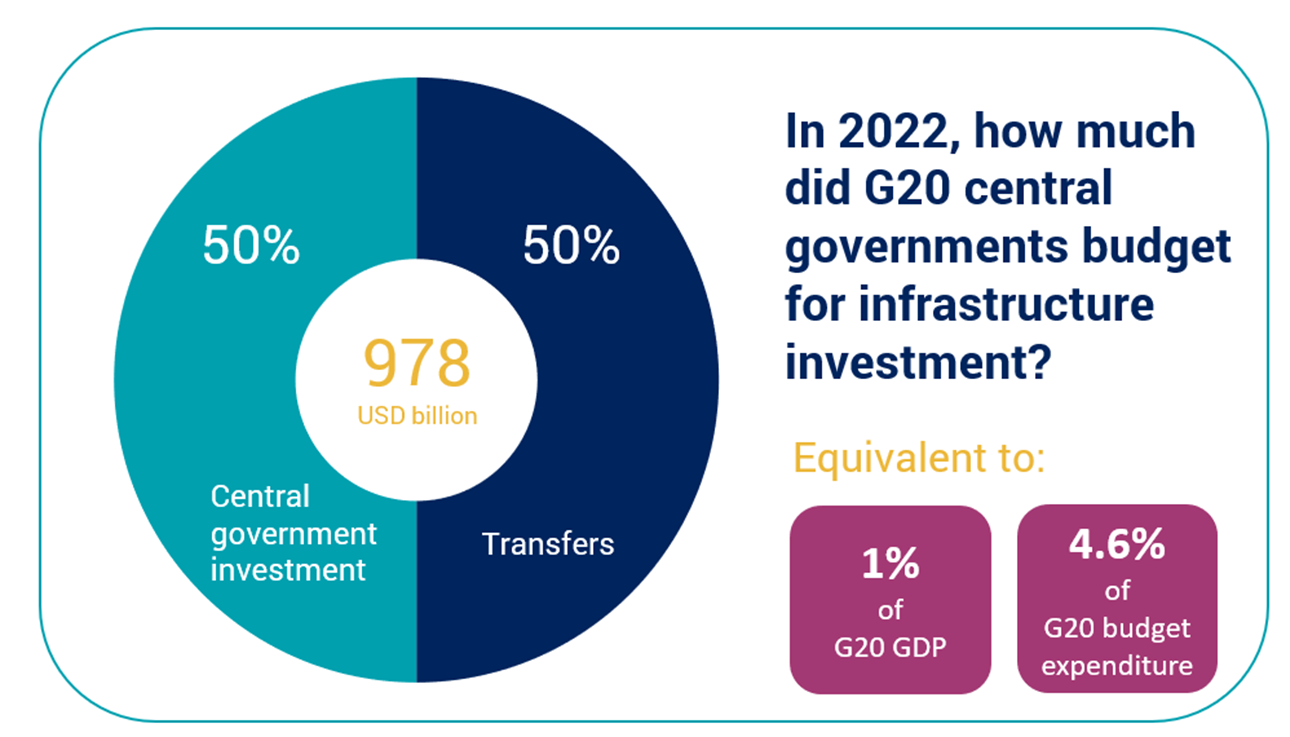
The GI Hub’s InfraTracker aims to help address this data gap by analysing public investment data presented in G20 government budgets
This paper exploits variations in the timing of telecommunications reforms across Europe to analyze the relationship between the rise of alternative work arrangements and the emergence of the Internet, which sectors are most impacted by the internet is also reviewed.
The paper analyses the impact of infrastructure on trade, suggesting that potential gains are large and increase with the quality of infrastructure of trading partners.

Public investment in infrastructure is more effective in increasing economic output than other types of public spending

Find out what needs to change in the workforce to meet future needs of the construction industry.

Infrastructure projects are capital-intensive and emerging countries often rely on private investment to implement them. As projects generate revenues in local currency (usually escalated by local inflation), the mismatch between the revenues and the debt service in foreign currency represents a major risk. Without a reliable mechanism to properly mitigate the foreign exchange (FX) risk, relevant sources of potentially long-term and less expensive funding are not accessible. A deep assessment of the FX risk and the development of innovative mitigatory solutions is critical to amplify the offer of long-term credit facilities for infrastructure financing.


How can cities absorb the influx of people without developing new and more efficient ways of building, transporting, and consuming resources? Without significant disruption across urban infrastructure, the cities of the future will struggle to keep up, much less make progress toward things like mitigating climate change or providing quality education to every student.

