

922 results found
Featured results

More results

A new global survey of major international institutional investors has found strong investor demand for infrastructure, including record levels of interest in emerging market infrastructure with 37.5% of all investors now active in these growing markets.
 Investor Survey Factsheet


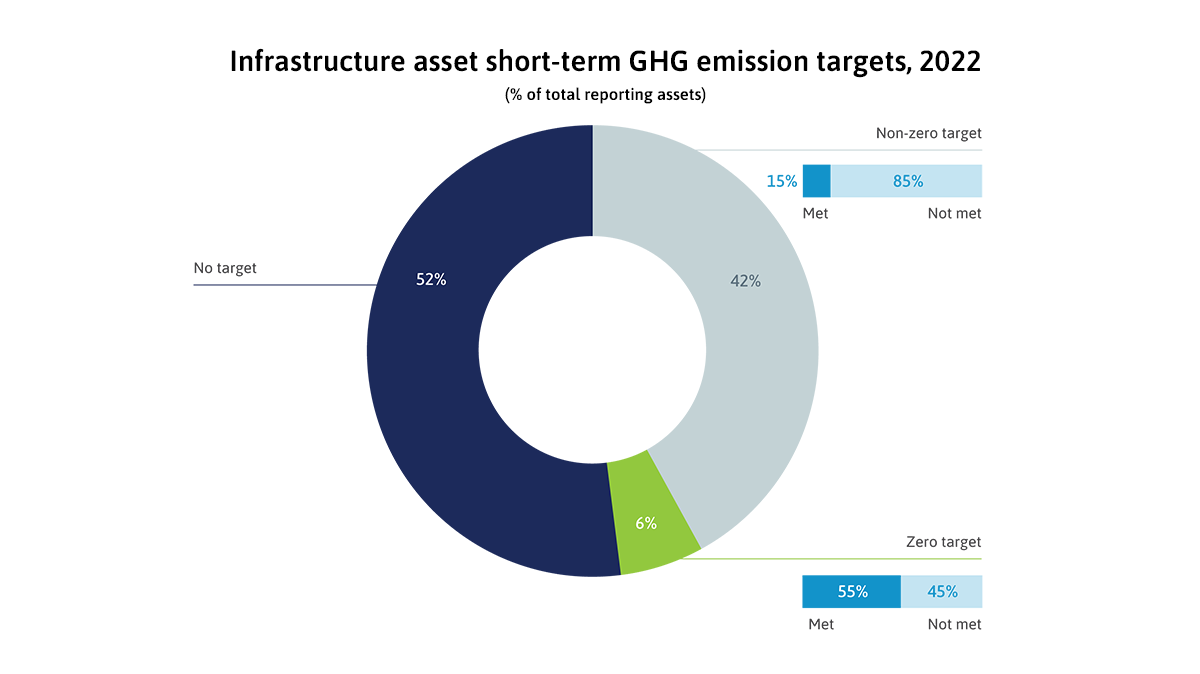
In 2022, infrastructure assets improved their ESG scores in all three pillars of ESG. The scores are encouraging, but they do not mean the assets themselves are more sustainable.
 Infrastructure Monitor insights

A new GI Hub initiative, launching in November 2021, tracks the amount of infrastructure as a stimulus announced by G20 governments and presents data insights that will help governments, investors, multilateral development banks, and project directors achieve transformative outcomes from infrastructure in the post-COVID-19 recovery.

Over 70 participants from 13 countries met in Dakar, Senegal from 26-28 November 2019 to participate in a three-day infrastructure and PPP workshop, led by the Global Infrastructure Hub.
This paper presents the state of infrastructure in developing Asian countries, in particular how the development of this infrastructure has correlated with past and current growth in Asia.

The GI Hub’s Rory Linehan outlines three critical infrastructure-related areas to watch for at COP28.
This paper discusses some of the main challenges in developing a robust and viable project pipeline to address the daunting infrastructure needs facing many countries worldwide.

Infrastructure Monitor is the GI Hub's flagship report on the state of investment in infrastructure. The 2021 report examines global private investment in infrastructure projects, infrastructure investment performance, project preparation, ESG factors in infrastructure investment, and COVID-19 impacts.

Infrastructure Monitor is the GI Hub's annual flagship report on the state of investment in infrastructure.

Infrastructure Monitor identifies and analyses global trends in private investment in infrastructure to inform future investment and policy.
The study analyses gaps and trends in investment infrastructure in the Western Balkans.
The paper discusses the potential contribution of transport infrastructure to regional growth in the years following the GFC.

The Infrastructure Investment Policy Blueprint offers a practical set of recommendations for governments on attracting private capital for infrastructure projects while creating clear social and economic value for their citizens.
 Learn more on Policy Blueprint

The Nabarro Infrastructure Index is a composite index, based on empirical and verifiable sources, which have been aggregated and weighted for application to listed countries to provide a unique tool to assist in the decision-making process.

Infrastructure Financing Trends in Africa – 2017 is the Infrastructure Consortium for Africa’s (ICA’s) annual report on how financial resources are being mobilised to facilitate the development of the continent’s transport, water and sanitation, energy and ICT sectors.
ICA’s flagship report, Infrastructure Financing Trends in Africa, shows trends of financing flows to infrastructure projects in Africa based on collected data from various stakeholders.
This paper expands upon existing literature by proposing a wider definition of what constitutes green infrastructure. We then develop a holistic cost model by defining and quantifying the investment categories that should be considered part of green infrastructure.
The Infrastructure Finance in the Developing World Working Paper Series is a joint research effort by the Global Green Growth Institute and the G-24 that explores the challenges and opportunities for scaling up infrastructure finance in emerging markets and developing countries.
This paper argues that with the rapid urbanization in Southeast Asia, local government units (LGUs) in Southeast Asia are comparable to their counterparts in Canada and therefore should move to a comprehensive/beneficial asset management system.

