
Filter by
203 results found

News
The G20 Brazilian Presidency and the Australian Co-Chair held the third Infrastructure Working Group (IWG) meeting in Foz do Iguaçu, Brazil, in June, which consisted of five sessions: Linking Infrastructure and Poverty Reduction, Delivering Cross-Border Infrastructure, Financing Climate-Resilient Infrastructure, Infrastructure Global Trends, and Mitigating Exchange Rate Risks. Henri Blas, Program Lead for the Global Infrastructure Hub, participated in session four of the meeting focused on Infrastructure Global Trends.
Read time: 2 minutes
Published
25 Jul 2024
View news


News
G20 Leaders met in New Delhi on 9-10 September 2023. The Leaders’ Declaration reflects an ongoing focus on sustainable and inclusive economic growth, of which infrastructure is a key part.
Read time: 2 minutes
Published
12 Sep 2023
View news

News
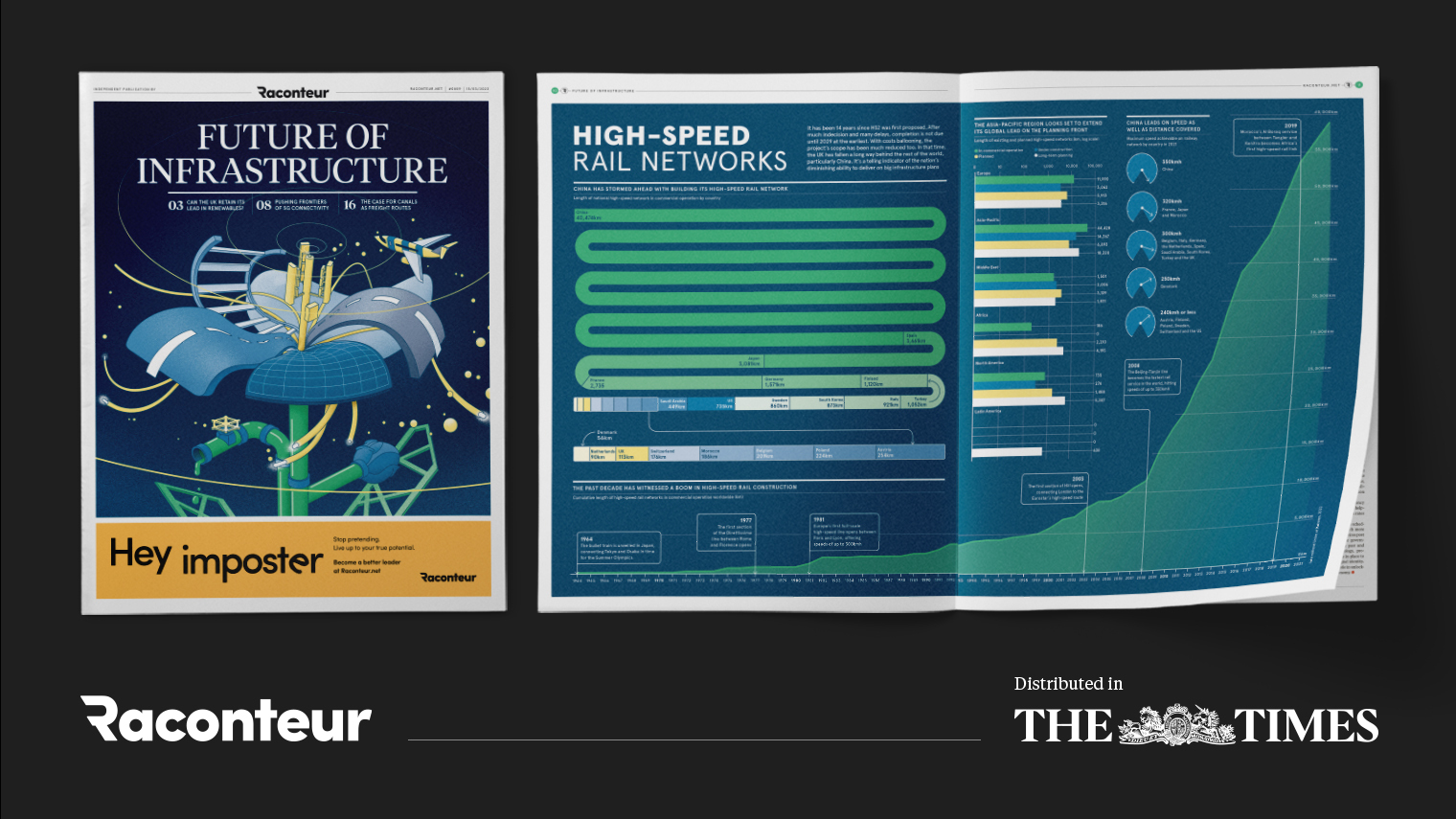
Cross-border infrastructure is essential for connectivity. The GI Hub has created a reference guide that presents key learnings and global practices for successful cross-border projects, drawing from a comprehensive literature review, analysis of case studies and the input of international experts in cross-border projects.
Read time: 1 minute
Published
09 Feb 2021
View news

News
The Output Specifications for Quality Infrastructure Reference Guide, helps governments to operationalise the definition of Quality Infrastructure Investment agreed on by G20 nations.
Read time: 1 minute
Published
11 Oct 2019
View news

News
Read more about Infrastructure Futures, our new report looking at the key megatrends with the potential to disrupt the industry through to 2050.
Read time: 2 minutes
Published
01 Jun 2020
View news

News
Last month, Jane Jamieson, the Program Manager for the Quality Infrastructure Investment (QII) Partnership and the Public Private Infrastructure Advisory Facility (PPIAF), along with Khafi Weekes, Climate Infrastructure Specialist at PPIAF, and Helen Gall, Monitoring and Evaluation ETC at QII, participated in the Understanding Risk Global Forum in Himeji, Japan.
Initiated in 2010, this year’s Forum was the largest yet, attracting over 1,700 Disaster Risk Management (DRM) and Climate Change Adaptation (CCA) experts and practitioners from across the globe.
PPIAF and QII had a strong showing at the Forum, participating in five events, including three plenaries and two workshops.
Read time: 3 minutes
Published
30 Jul 2024
View news

News
Newly trained African infrastructure specialists poised to help close $3 trillion infrastructure gap
Africa’s unmet infrastructure need is estimated at nearly $3 trillion by 2040, a new training program aims to drive investment to help close Africa’s infrastructure gap.
Read time: 3 minutes
Published
15 Dec 2020
View news

News
The GI Hub today launches a shorthand cost-benefit analysis tool for analysing the environmental, social, and economic (ESE) benefits of bus transport projects.
Read time: 2 minutes
Published
01 Sep 2021
View news

News
Private investment in infrastructure through primary market transactions remains low at around US$100 billion per year and has been declining over the past decade according to a new Global Infrastructure Hub (GI Hub) report, Infrastructure Monitor 2020.
Read time: 3 minutes
Published
27 Oct 2020
View news

News
The Guidance Note, developed by the GI Hub in collaboration with Cambridge Economic Policy Associates Limited (CEPA), identifies lessons learned from various existing NIBs in both emerging markets and high-income countries through 11 case studies which explore different NIBs that have existed from 1945.
Read time: 1 minute
Published
28 Jun 2019
View news

News
To increase understanding and improve the consideration of circular infrastructure, the GI Hub has formed a Circular Economy in Infrastructure Action Group that includes global, senior leaders in circular economy and infrastructure across the public and private sector.
Read time: 2 minutes
Published
05 Apr 2022
View news

News
Our CEO has contributed an article to the G20 India: The 2023 New Delhi Summit publication, alongside articles by country leaders, heads of international organisations, and other experts.
Read time: 1 minute
Published
14 Sep 2023
View news

News
Introducing a new professional training program for developing and delivering infrastructure for equal access, affordability, and economic empowerment.
Read time: 1 minute
Published
20 Sep 2023
View news

News
The Global Infrastructure Hub (GI Hub) has now signed a consultancy contract for the development of a reference tool to address inclusion in large infrastructure projects.
Read time: 1 minute
Published
24 Nov 2017
View news

News
The Africa Infrastructure Fellowship Program (AIFP)—a joint initiative between the Global Infrastructure Hub (a G20 initiative), private investment firm Meridiam, and the World Economic Forum (WEF)— has been formally announced by Mr Jean-Baptiste Lemoyne, the Secretary of State attached to the Minister for Europe and Foreign Affairs.
Read time: 3 minutes
Published
12 Jul 2018
View news
News
The GI Hub wants to hear your views on the policies and practices that enable greater investment in infrastructure.
Read time: 1 minute
Published
29 Nov 2016
View news

News
InfraTracker is an open access tool that shows how much governments invest in infrastructure, and how they allocate this investment. It is the first tool of its kind and scale to be developed with the cooperation of G20 governments.
Read time: 1 minute
Published
12 Apr 2023
View news

