

118 results found
Featured results

More results
The MDBs’ Joint Declaration of Aspirations on Actions to Support Infrastructure Investment is a tool developed to ensure that MDBs work together to scale up infrastructure investment and attract private sector investment.
 Download the document [PDF]


Today we released two new supplements to our Infrastructure Monitor report, focusing on the role of blended finance and environmental, social, and governance (ESG) factors in infrastructure investment. These latest updates, developed in partnership with Convergence and GRESB, offer a comprehensive examination of both areas, providing valuable insights for infrastructure professionals.

Infrastructure was a major topic at Climate Week NYC 2023. In this article, we share a summary of Climate Week, through an infrastructure lens.
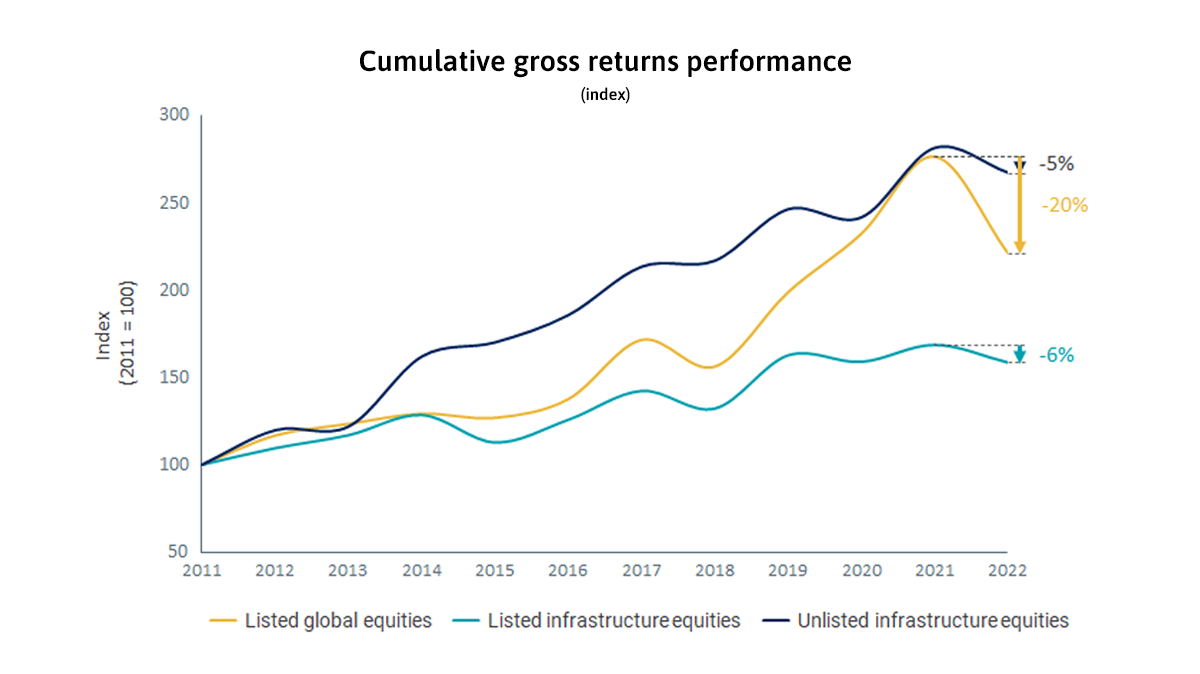
Infrastructure equities provide stronger protection against inflation shocks than the broader equity market. During the rapid inflation shocks in 2022, the return on infrastructure equities was more resilient than that on global equities, which drove private fundraising for infrastructure to record levels.

Amidst rising interest rates and soaring inflation, infrastructure debt is an increasingly attractive investment strategy for private investors. Alex Murray, Vice President, Research Insights, Preqin explores this trend and what it means for infrastructure investments.
 Infrastructure Monitor

Kathrin Heitmann, CFA, Vice President - Senior Credit Officer, Global Infrastructure and Project Finance Group, Moody's Investors Service explores data-related findings that highlight how project and infrastructure debt continued to perform well during the COVID-19 pandemic.
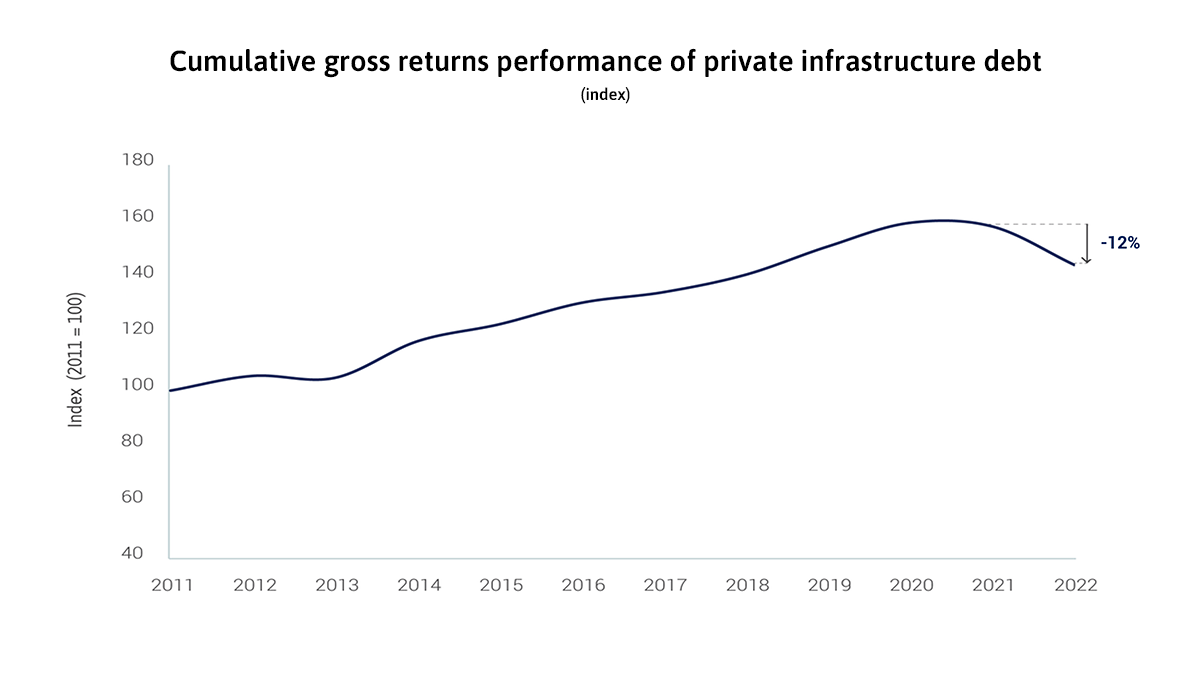
Rapid and sharp interest rate hikes in 2022 lowered the market value of existing infrastructure debt locked-in at the previous lower rates. Still, the attractiveness of infrastructure debt increased among private investors on account of its lower credit risk than corporate debt and increasing investors’ risk aversion

The credit risk metrics for infrastructure debt improved during the COVID-19 pandemic, while those for non-infrastructure debt worsened. The performance of infrastructure loans demonstrates that infrastructure assets are resilient to adverse economic scenarios like pandemics.
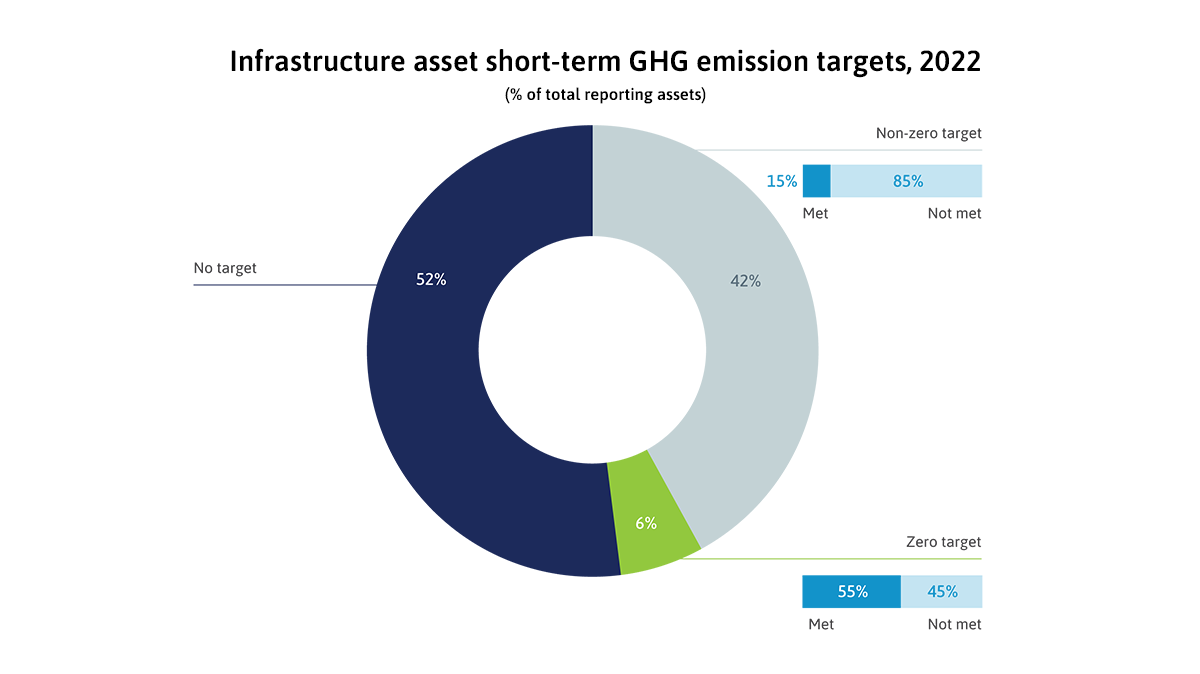
In 2022, infrastructure assets improved their ESG scores in all three pillars of ESG. The scores are encouraging, but they do not mean the assets themselves are more sustainable.

The GI Hub’s Rory Linehan outlines three critical infrastructure-related areas to watch for at COP28.

Infrastructure Monitor is the GI Hub's flagship report on the state of investment in infrastructure. The 2021 report examines global private investment in infrastructure projects, infrastructure investment performance, project preparation, ESG factors in infrastructure investment, and COVID-19 impacts.

Infrastructure Monitor is the GI Hub's annual flagship report on the state of investment in infrastructure.

InfraTracker tracks public investment in infrastructure to help governments shape programs and budgets that achieve the best outcomes.
The Investor Leadership Network created this playbook to help institutional investors better assess and incorporate inclusion into portfolios. It provides the business case for inclusion, fundamental and advanced inclusion metrics, and case studies of the metrics being used.
 View the playbook

Comparison of InfraTracker data with private investment figures in Infrastructure Monitor also indicate that, in general, governments are the driver of investment in all infrastructure sectors except for energy.

We need more investment in economically, environmentally, and socially sustainable infrastructure, but there is real danger that investment by both the public and private sectors may slip backward

The COVID-19 pandemic boosted investors’ interest in digital infrastructure and digital services. Policymakers have an opportunity to amplify these effects by accelerating market reforms
The IMF has compiled a suite of analysis, research, diagnostic tools, country reports, data sets, and other resources on the importance of public investment as a catalyst for economic growth.

The GI Hub’s Sam Barr has authored an article that looks at the US Inflation Reduction Act, its explicit shift toward protectionism, and how it may provide an opportunity for the US to be a global leader in a just green energy transition.
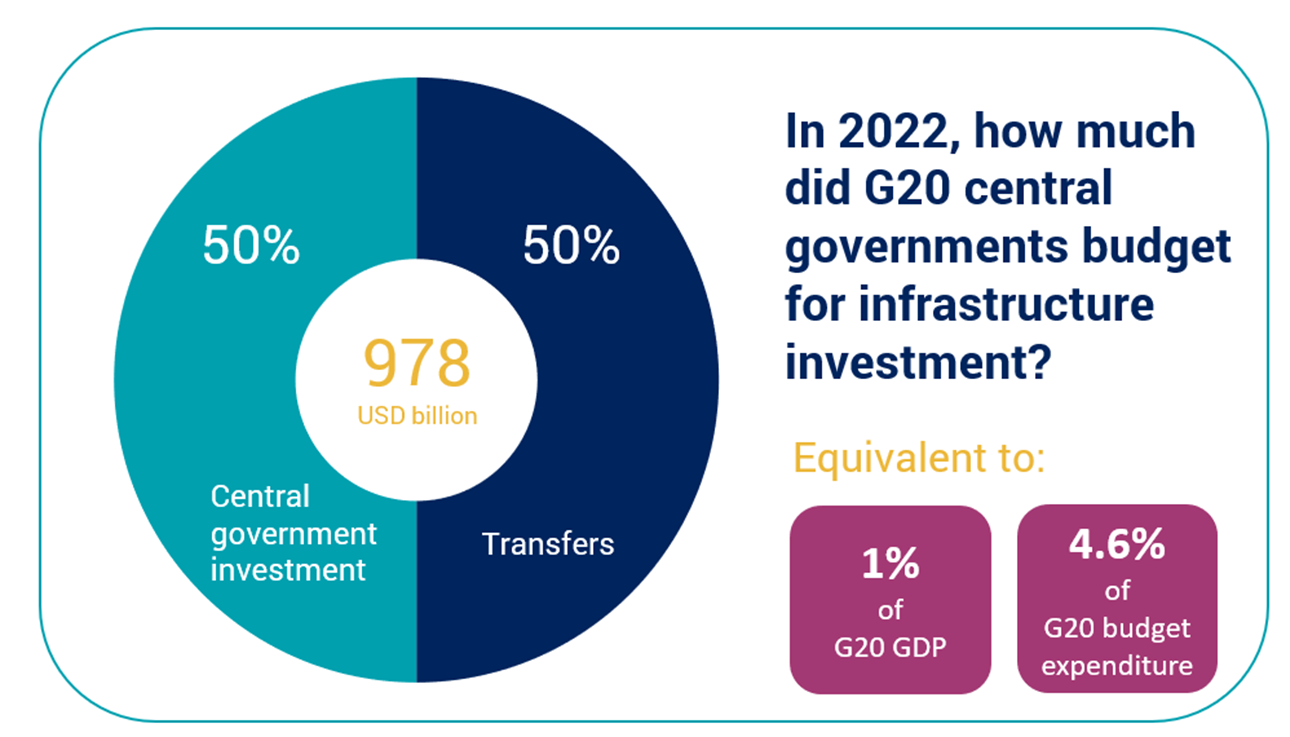
The GI Hub’s InfraTracker aims to help address this data gap by analysing public investment data presented in G20 government budgets

