
Publications
579 results found
This policy brief reviews two aspects of independent regulation: institutional efficacy, including primarily autonomy, capacity, and accountability; and the mode of regulation, or the regulator's functional scope. Recommendations are made in the policy brief relating to the entire regulatory process.
 Download

Infrastructure projects to carry out environmental impact assessments to prevent adverse impacts on the environment after project implementation.
 Link
Link
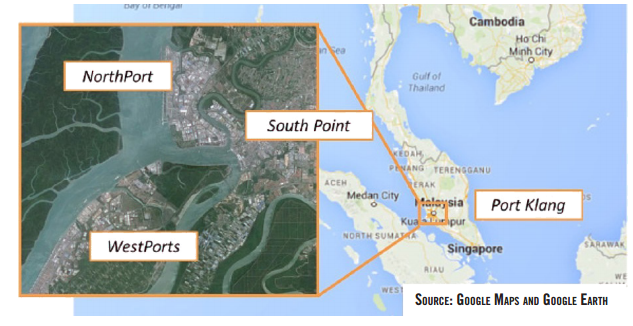
The Malaysian government has improved the capacity and efficiency of its port infrastructure by involving the private sector.
This paper analyzes the economic impacts of the Second Mekong International Bridge linking Mukdahan Province in Thailand with Savannakhet Province in the Lao People's Democratic Republic using a general equilibrium model.
This study analyses the direct and indirect links between cross-border infrastructural development and poverty reduction under the guise of transport, electricity and communication infrastructure.
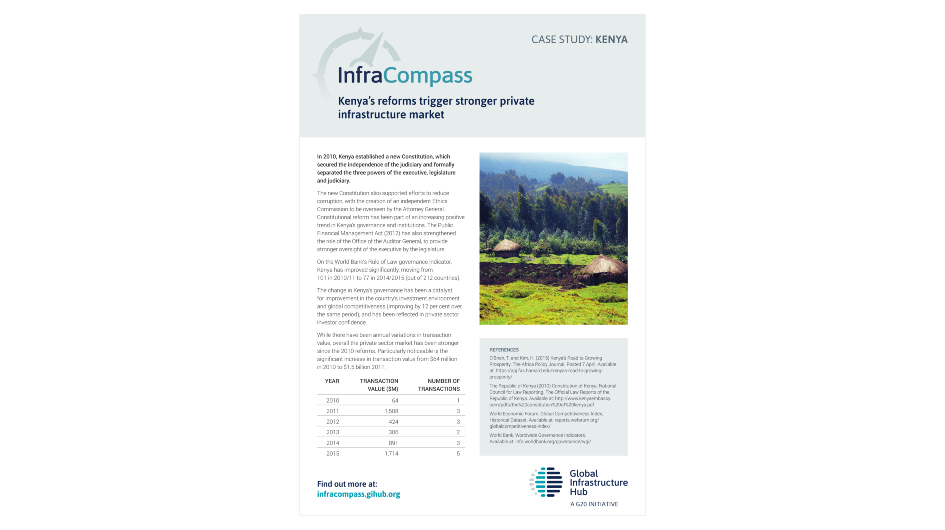
This analysis was drawn from the GI Hub's InfraCompass tool. The case study reflects on how change in Kenya's governance acted as a trigger to make it a stronger private infrastructure marlet.
 Link
Link
This report indicates that although privatization, competitive restructuring, and regulatory reforms improve infrastructure performance, several issues must be considered and conditions met for these measures to achieve their public interest goals.
The Reference tool is meant to serve as a practical tool to help governments and other stakeholders understand and implement the critical success factors that deliver inclusive infrastructure.
InfraTech is defined by the G20’s Infrastructure Working Group (IWG) as “the integration of material, machine, and digital technologies across the infrastructure lifecycle” and is supported by three reference notes produced in collaboration between the G20 IWG, the World Bank and the GI Hub: 1) The InfraTech Stock Take of Use Cases; 2) The Value Drivers for InfraTech; and 3) The InfraTech Policy Toolkit.
The Recommendation calls for governments to assess their public procurement laws and practices at all levels of government in order to promote more effective procurement and reduce the risk of bid rigging in public tenders.
The OECD Recommendation on Public Integrity provides policy makers with a vision for a public integrity strategy.
This publication reports the findings of a 2014 summit on the challenges of urbanization in Latin America and China.
This Railway Reform Toolkit aims to provide aneasy-to-use resource on the rail industry —what it is and what it does best— and to provide an experience-based set of best practices to aid inthe planning and execution of railway reforms.
This Railway Reform Toolkit aims to provide an easy-to-use resource on the rail industry and to provide an experience-based set of best practices to aid in the planning and execution of railway reforms.
This report sets out several of the recent advances, and suggests the most promising approaches, to the quantification and valuation of some of the wider economic benefits that flow from transport-related development.
This paper discusses the approaches that analyze the way in which new transport infrastructure may lead to the restructuring and rebalancing of local and regional economies through structural change and the relocation of activities.


This page discusses the need for legal reform to enhance the PPP environment in EBRD regions.

