
Publications
602 results found
This document discusses how science-based indicators of vulnerability to climate change and of adaptability can inform the prioritization of adaptation assistance from a global adaptation fund.
 Download

This paper provides a contextual commentary on the state of infrastructure delivery around the world. The views within are not necessarily that of the GIobal Infrastructure Hub (GI Hub) but are an important viewpoint to contextualise use of the GI Hub’s Improving Delivery Models initiative framework
 Improving Delivery Models
This review is designed to assist the development community and policy makers in other countries who may be contemplating railway privatization.
Infrastructure projects in the Netherlands, such as the construction of roads, bridges and tunnels, have become larger and more complex in recent years. This thesis is about these kinds of infrastructure projects, about the challenges and tensions that go with them, about how people experience them and how they look jointly for solutions, and how they succeed or sometimes fail.
The objective of this review is to analyze the current status on achievement of targeted benefits from distribution privatization and identify the gaps between expectations and realizations, with a key task of proposing concrete procedures and methodologies to ensure that EMRA and other government agencies involved in monitoring and enforcing quality in electricity distribution and retail have timely access to reliable information on service actually provided by the DISCOMs to their customers.

A presentation on the current state of the Indonesian economy and economic policy, including in infrastructure sector.
 Link
Link

G20 Leaders endorsed the High Level Principles on Long-Term Investment Financing by Institutional Investors in September 2013, which is intended to help governments facilitate and promote long-term investment by institutional investors.
This report summarises the growing involvement of consumer participation in infrastructure regulation in the context of East Asia and the Pacific.
This paper analyses the outcomes from dynamic pricing of a utility on its profits, in the context of the utility facing competitive fringe, short-run network adjustment costs, theft of service, and the threat of a retaliatory regulatory review.
This policy brief reviews two aspects of independent regulation: institutional efficacy, including primarily autonomy, capacity, and accountability; and the mode of regulation, or the regulator's functional scope. Recommendations are made in the policy brief relating to the entire regulatory process.
This paper examines what factor facilitates most network expansion using micro data from 45 fixed-line and mobile telephone operators in 18 African countries by looking into network externailties and discriminatory pricing.
Infrastructure projects to carry out environmental impact assessments to prevent adverse impacts on the environment after project implementation.
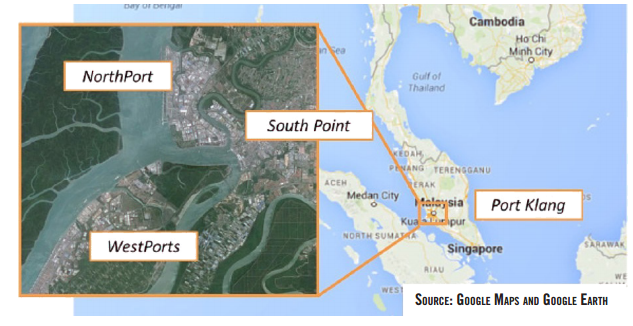
The Malaysian government has improved the capacity and efficiency of its port infrastructure by involving the private sector.
This paper analyzes the economic impacts of the Second Mekong International Bridge linking Mukdahan Province in Thailand with Savannakhet Province in the Lao People's Democratic Republic using a general equilibrium model.
This study analyses the direct and indirect links between cross-border infrastructural development and poverty reduction under the guise of transport, electricity and communication infrastructure.
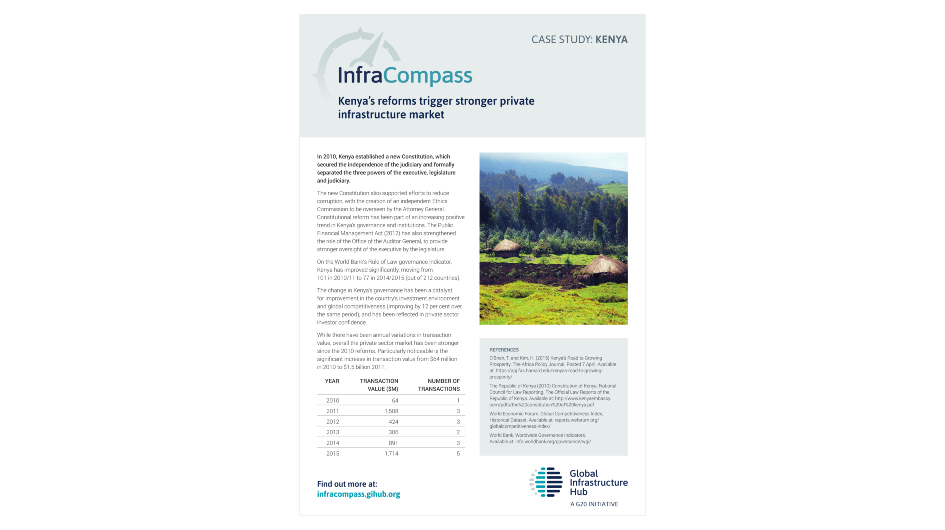
This analysis was drawn from the GI Hub's InfraCompass tool. The case study reflects on how change in Kenya's governance acted as a trigger to make it a stronger private infrastructure marlet.
This report indicates that although privatization, competitive restructuring, and regulatory reforms improve infrastructure performance, several issues must be considered and conditions met for these measures to achieve their public interest goals.
The Reference tool is meant to serve as a practical tool to help governments and other stakeholders understand and implement the critical success factors that deliver inclusive infrastructure.

