

60 results found

Cross River Rail is a 10.2 km, AUD5.4 billion (2 billion) rail line in Brisbane, Australia linking Dutton Park to Bowen Hills. It includes 5.9 km twin tunnels crossing underneath the Brisbane River and CBD and four new underground stations and eight upgraded stations, doubling the railway capacity across the Brisbane River. It will also involve developing three new Gold Coast stations.

The Gateway Review Process, developed by the United Kingdom Office of Government Commerce (OGC) (a Treasury office) in the early 2000s, is a process now used by several jurisdictions around the world that aims to give greater scrutiny and oversight to major projects throughout their lifecycle.

To service the increased demand and protect Sydney’s inland waterways, Sydney Water commissioned three major inland wastewater treatment plant upgrade projects – Riverstone Wastewater Treatment Plant, Quakers Hill Water Recycling Plant, and St Marys Water Recycling Plant.

Australia's national government introduced policy to incentivize asset recycling by state-level governments, by offering up to 15% of the sale or lease proceeds of asset privatizations for re-investment in infrastructure projects
 NSW Infrastructure privatization Overview of privatizations in NSW

UN ESCAP supports governments in Asia-Pacific in implementing measures to efficiently involve the private sector in infrastructure development.
As of April 2019, the IFC successfully raised USD 7.1B from eight global investors through the MCPP, USD 3.6B worth of funds
The International Finance Corporation (IFC) has a mandate to mobilize private financing and is looking to do this through various syndicated products including: B Loans, Parallel Loans and A Loan Participations

FOR CONSULTATION The draft Guidance Note on National Infrastructure Banks and Similar Financing Facilities is open for public consultation to capture your insights and feedback for the final version.
 Consultative Version - Full Report
The iRAP case studies showcase activities that are saving lives and preventing serious injuries on roads.
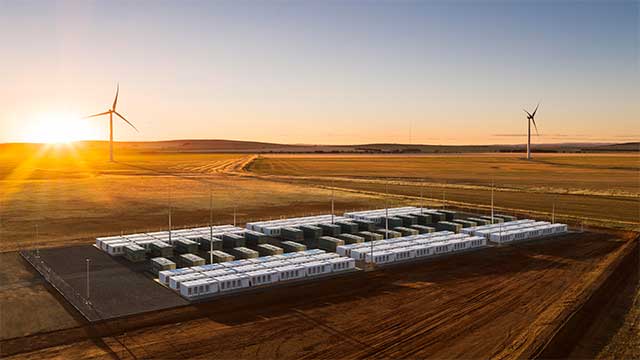
The Hornsdale Power Reserve is the world s largest lithium-ion battery which is helping to manage summertime peak load, reduce intermittencies and improve the security of South Australia s electrical infrastructure.

As part of a larger USD 63B1 infrastructure investment, the New South Wales (NSW) government sought to develop a light rail network

Augmented Reality (AR) and Virtual Reality (VR) can be integrated in all stages of infrastructure planning and design to transport users into virtual environments that reveal what designs could look like when constructed and how they would impact upon the existing environment.

Augmented Reality (AR) and Virtual Reality (VR) can be used to deploy training programs and assist workers in performing asset inspections and maintenance works.

A water height and flood management system enables local authorities to predict flooding and avoid building infrastructure in high risk areas.

Artificial intelligence (AI) that streamlines processes, documents and data in the flow of goods to reduce duplication, automate handshakes, and improve status accuracy.

V2V technologies are Cooperative Intelligent Transport Systems (C-ITS) that enable communication between vehicles to avoid accidents and and enable the optimisation of traffic flow.

A dynamic tolling algorithm recalibrates toll rates based on traffic congestion and local conditions every few minutes and is a tool to manage traffic demand through pricing.

Decentralised microgrids enable 'prosumers' to trade their surplus energy, resulting in reduced cost, increased use of renewables, and reduced demand on the energy grid.

Digital technology integrated into smart containers enable accurate near real-time monitoring and control of the condition, location and the environment of shipping containers.

Mobility as a Service (MaaS) uses a digital platform to integrates end-to-end trip planning, booking, ticketing, and payment across all modes of transportation.

Digital technology to enable regulators to measure water abstracted and use data for compliance and enforcement purposes.

