

989 results found
Featured results

More results
This Guidance Note supports promoters, practitioners and other interested stakeholders in interpreting and implementing Standard 3 on Biodiversity and Ecosystems, as part of the EIB Environmental and Social Standards.
 Download

The paper discusses project preparation and procurement approaches adopted in Latin America and the Caribbean and how sustainability is incorporated into these.
This paper establishes a general equilibrium trade model and adopts the “market access” approach to measure the impact of the high-speed railway (HSR) network on the economic growth.
This study examines the potential role of the Central Asia Regional Economic Cooperation (CAREC) Program in improving aviation in the region.
This publication examines the effective regulation and governance practices of the pharmaceutical sector in the Greater Mekong Subregion.
The OECD DAC Blended Finance Principles for Unlocking Commercial Finance for the SDGs aims to ensure that blended finance is deployed in the most effective way to address the financing needs for sustainable development.
This brief analyzes the benefits and challenges of using portable screening devices to regulate medicine quality in low-income countries.
The document contains the key anti-money laundering and combatting financing of terrorism ( AML-CFT ) principles applicable to EIB Group activities and is in line with the principles of relevant EU legislation as amended and more.

The European Investment Project Portal (EIPP) and the Global Infrastructure Hub (GI Hub) announce their cooperation to exchange projects for publication on their websites.
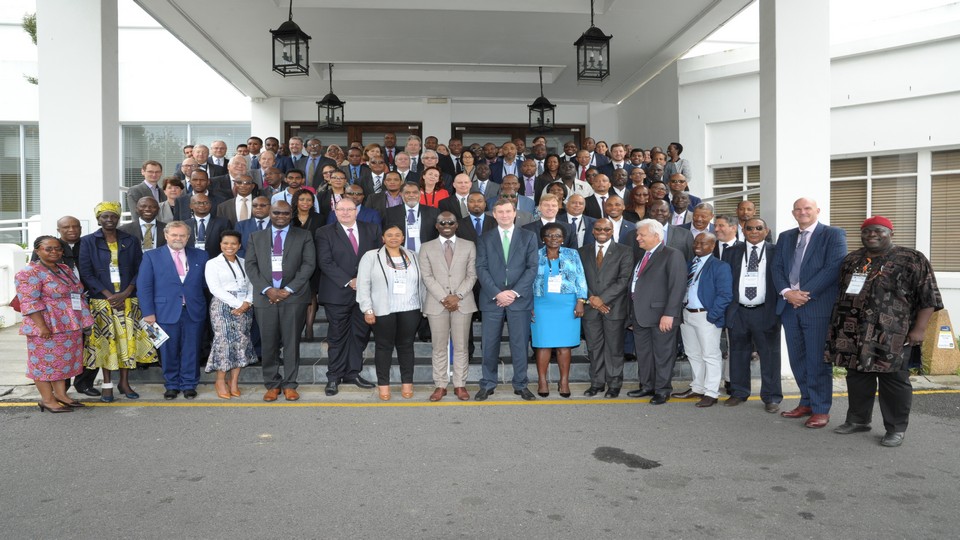
A major factor hindering infrastructure implementation and delivery is the absence of good governance, according to the 130 delegates from 27 countries who came together for the first Regional Roundtable on Infrastructure Governance in Cape Town in November.
 World Bank Blog
 Global Infrastructure Outlook
The investment life cycle and High Value High Risk (HVHR) Framework (life cycle guidelines) apply to all government departments in the state of Victoria and support the development of business cases for capital investments.
The purpose of this manual is to contribute to improvements in the quality of infrastructure regulation.

While 2017 was an eventful year for the Global Infrastructure Hub (GI Hub), 2018 is shaping up to be even busier.
The main point of this report is to provide quantitative evidence of how improving utility management and more accurately targeting smaller subsidies would free up enough resources to make the needed investments and operate the sector at a lower cost.

Over the past few decades, there has been substantial change in living standards globally. Keeping pace with profound economic and demographic changes will require a significant increase in infrastructure investment.
This report provides a view on the Chongqing area and argues three dimensions of connectivity can be improved: physical (infrastructure) connectivity, digital connectivity, and economic integration with nearby areas, the report then provides a strategy on how to carry this out.

An industry event about the need to attract private capital and develop infrastructure as a standalone asset class is nothing new. However, the G20 Infrastructure Financing Seminar that took place in London last week was unique in that it had the most wide-ranging and intense interactions between governments and the private sector that I have seen to-date.
These policy guidelines are intended to help countries design and implement competitive selection processes for supporting renewable energy.
These Guidelines provide a viable framework for prospective bidders (Proponents) to submit innovative and unique ideas (Unsolicited Proposals).

Over the last decade, much has been written about globalisation and how we’re more connected than ever before. In the infrastructure world, we think of connectivity as the “linkages of communities, economies and nations through transport, communications, energy, and water networks across a number of countries” .

